The Ocean Between Us
A review of Atlantics (2019) by Tino Hluyo

First staged in early 411 BCE, Lysistrata, the ancient Greek comedy by Aristophanes, depicts the on-goings of several warring city-states engaged within the Peloponnesian War. During this war, a meeting convenes between the women of the differing states, all concerned and equally disturbed by their endless stupor of brutal, senseless violence. At the end of this meeting, a resolution and call to action is decreed around a wine bowl: the wives and partners of these warring men devise that, in order to end this war, they will withhold all sexual privileges from all menfolk until the bloodshed comes to and end.
Lysistrata also functions as the name of its lead character, an Athenian woman marked by her immense sense of individual and social responsibility. Her sympathy lies towards those women who must sit idle for, at times, years on end with no assurance on the status of their husbands, set out for battle (for those youngest, there is instead a lack of assurance that they will ever be wedded in the first place, as their cities are left barren of youthful men). Lysistrata leads her womenfolk into a morally imperative act of rebellion, yielding from their menfolk from an undeniable “resource”, an ultimatim for those who have otherwise ignored them during waves of bloodlust and battle.
The play is relatively early as an artistic examination of relations between genders, particularly as one looking through a materialist lens, which mirrors said relations to those throughout various schemes of labour.
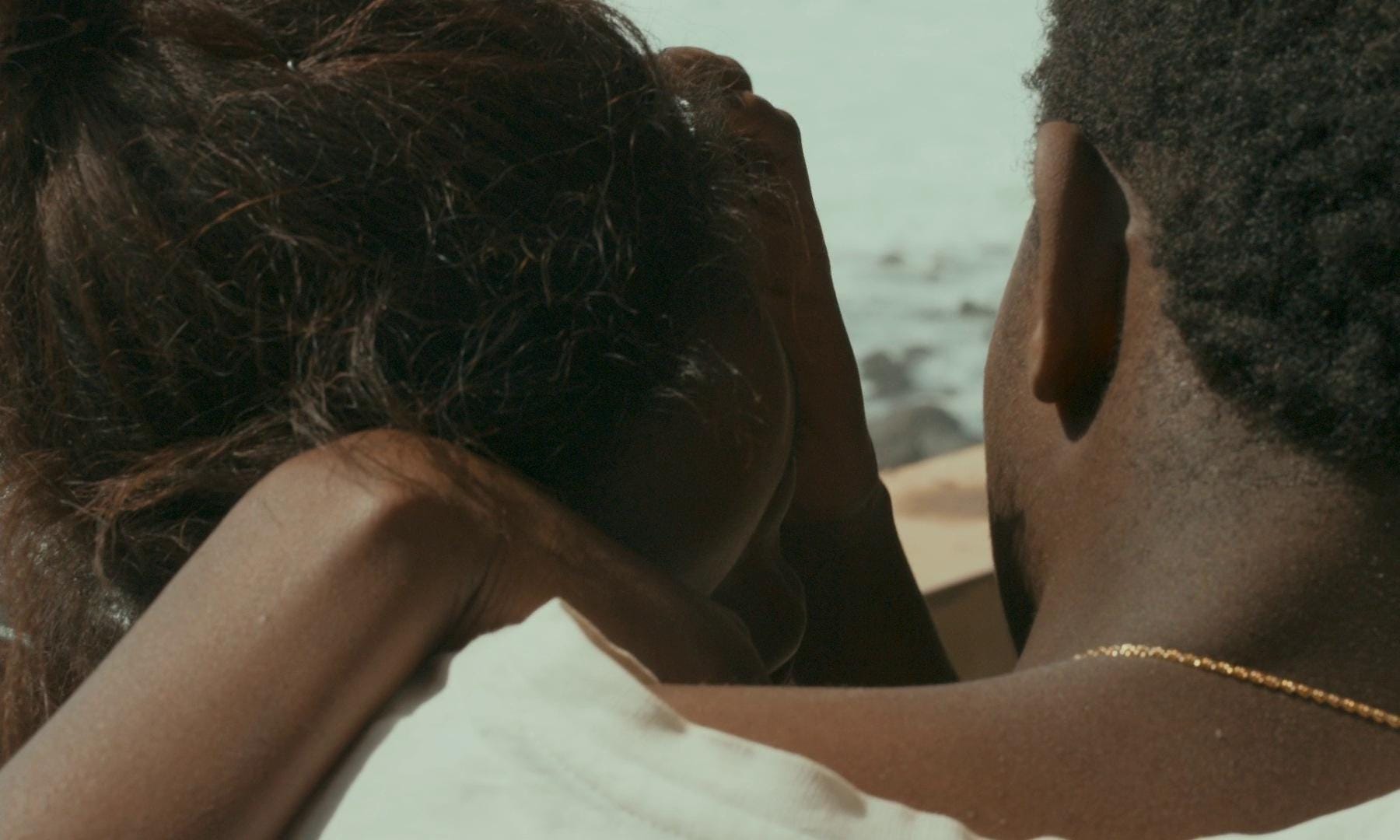
“The direct, natural, and necessary relation of person to person is the relation of man to woman” Marx wrote; “The relationship [also] reveals the extent to which man’s need has become a human need: the extent to which, therefore, the other person as a person has become for him a need” . As a result of the rebellious act Lysistrata and her countrywomen undertake to confiscate the undeniable need for intimacy possessed by all men (and of course, by most people), it is revealed towards them and the audience where our various needs fit within intrapersonal hierarchies.
Of course, the desire for conquest, propelled by the ongoing heartbeat of war, connects directly to one’s desire for intimacy, or the family structure, or whatever one looks for in the sexual ecosystem. All aspects of our characters’ lives are influenced by the material.
It seeps into all; love is not love on its own. More is asked without our say in the matter.
Atlantics (2019) takes great pains to acknowledge that, between classes, conflict is continuous and unbearably quiet. A war between classes, between ruler and all their subjects, wages on endlessly as long as those who remain subject to the ruling class remain subjected to systems well beyond rules of their own making. We deem working class life as a “fight for survival”, and if one does not fight alone; there is an inherent enemy in one’s battle for fair treatment a humane standard of life.
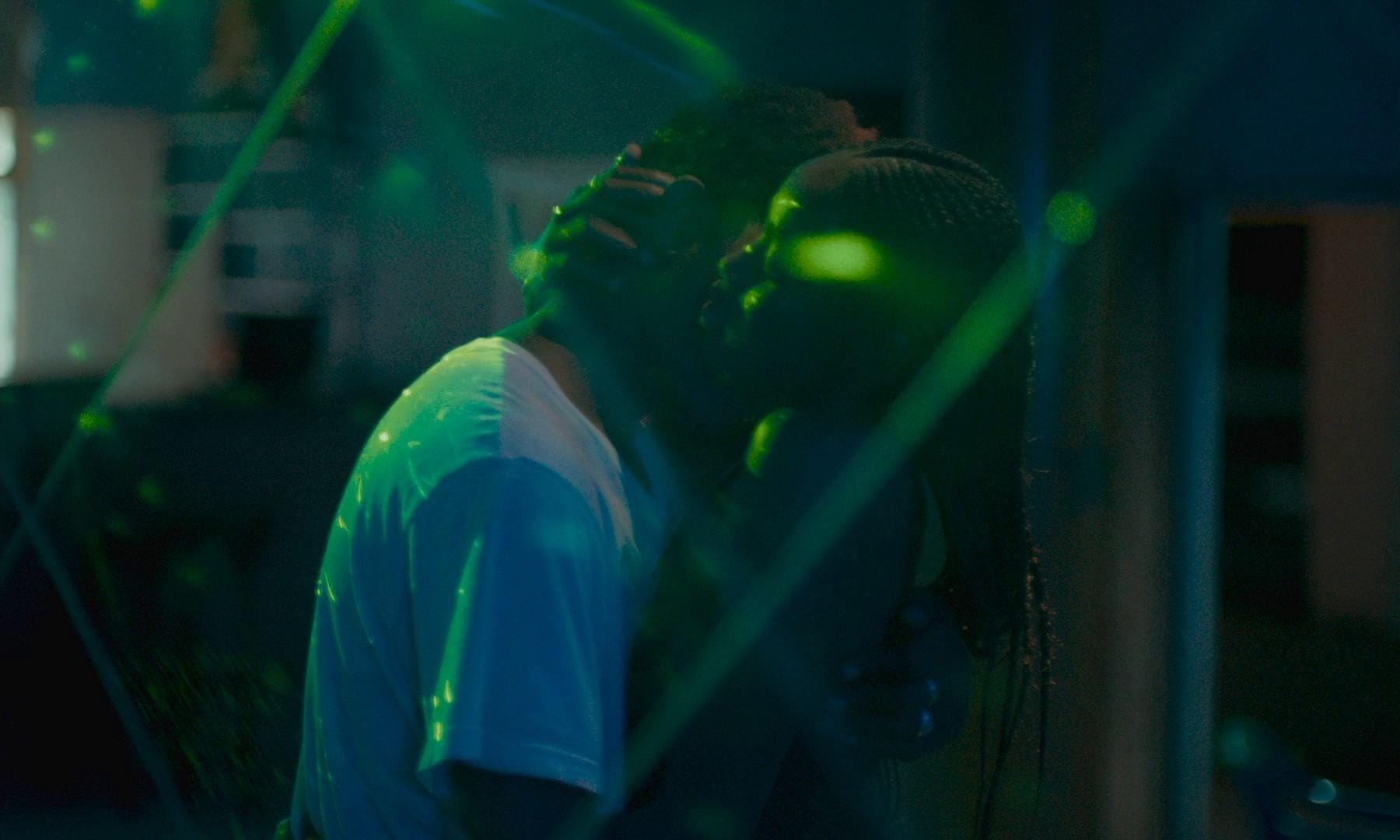
Souleimane and his colleagues— or better yet, comrades— are painfully aware of how non-negotiable their ties to their employers are. This imbalance can only shift through force. The neon-lit drinking hole central to multiple key scenes in the film is an oasis in many regards. The bar is where they replenish, reconvene and reciprocate flowering desires between women who lounge around, lazily, on worn couches stamped against mirrored walls and waving disco balls. The connection between men and women here are certainly genuine, but one cannot ignore how they necessitate an area of commerce, such as a bar, where sexual negotiations can take place.
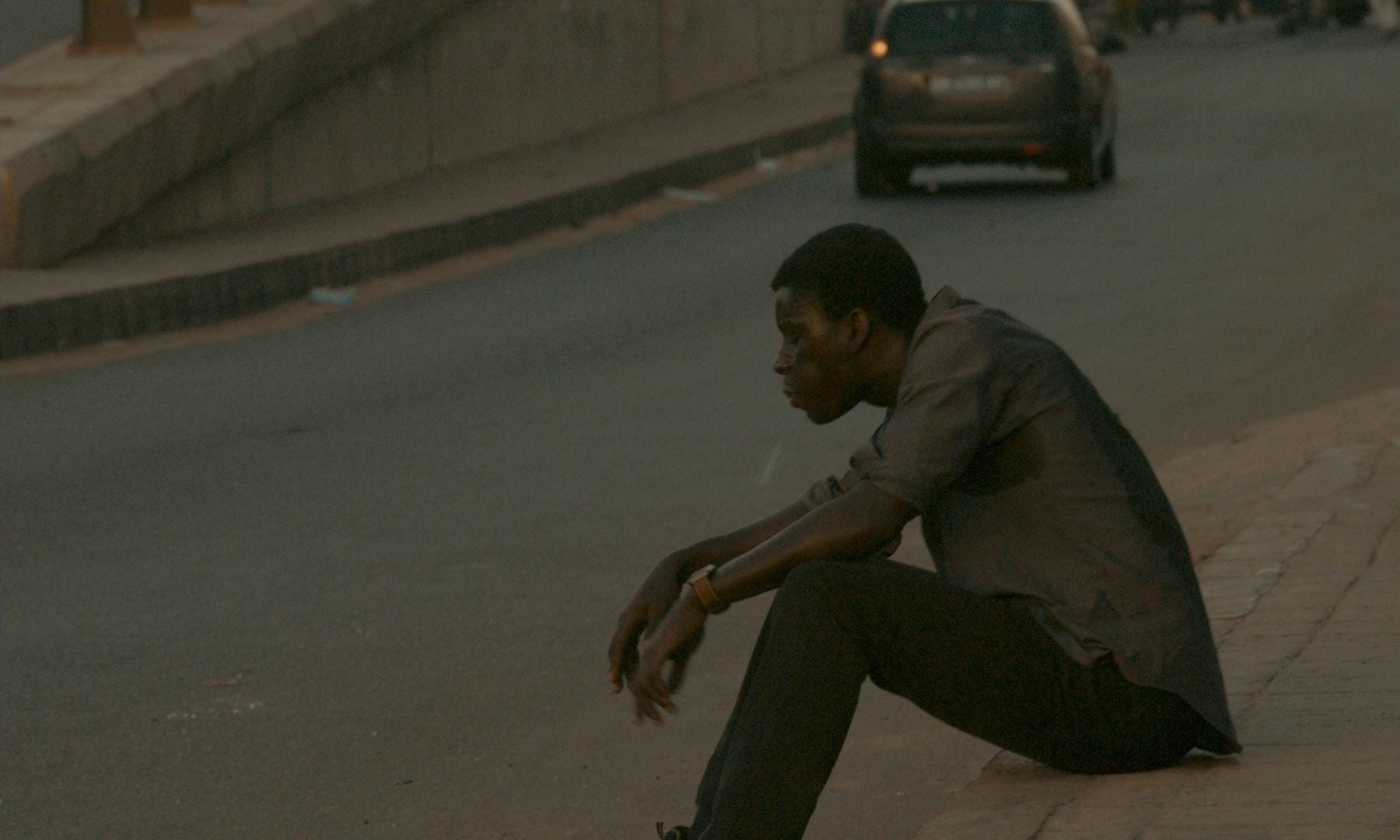
Once Souleimane and his comrades decide to sail away to Spain for better pastures, and to deny their employer from free unfair labour, the relation between labourers and owners are finally disrupted, though so are the dynamics between men and women in equal regard. Their absence is immediately felt amongst them, including our protagonist, Ada. Her emotional state is continuously stuck between blind faith and optimism for Souleimane’s return and an unspoken state of mourning for a man, or a group of men, that may never come back, that may have lost their lives on their journey for a man’s dignity.

Death is not addressed through conventional film tropes and techniques in Atlantics. The central question is not whether or not those men have “made it” to Spain or not, it is rather one that surrounds the question of compensation and reconciliation. The industrialist who mistreats and robs his employees must answer and atone, else he will be haunted both literally and figuratively by those he has wronged.
But here’s the thing with Mati Diop’s filmic approach; it does not only bridge the gap between life and death, as divisions between the material, the conceptual, and the spiritual are thrown away entirely. Guilt, grief, and love are all physically embodied. The men come back through supernatural means, possessing those very same women with whom they shared emotional and physical connections.
They figuratively and literally possess us, who cannot brush our emotions under flat words and pleasant platitudes. The industrialist is confronted by these possessed young women, not only as emotional reminders of wrongdoing, but as physical stamps of debt. Not only that, as their bodies are reminders of corporate theft as something that steals from the mouths of families, not only men. Children and women are left unaware and unsure of tonight’s bread on the table, and maybe these transgressions go down easier for those greedy business owners because they only have to come face-to-face with ordinarily masculine visages towards which their sympathies can lay dormant towards. Much like in war, it is easier to take away a human being’s means of survival and in fact their life if they do not ensoul the seemingly delicate, seemingly innocent faces of women and children.
The women of Atlantics are brought into the process of labour, of the process to procure the means for a living, by force. This is of course no indictment of the men who possess them, as it is of a necessary means to ensure protection and dignity for all of them as one cohesive working class. Lysistrata is set in a world, in some ways, without men, wherein women’s silent labour finds the irrepressible urge to scream, to yell out for long-awaited recognition and justice amongst the vague fueds between men. Similarly, the women of of Atlantics fulfill a similar objective, though this time in union with the men as they are both at the short end of the stick of class injustices.
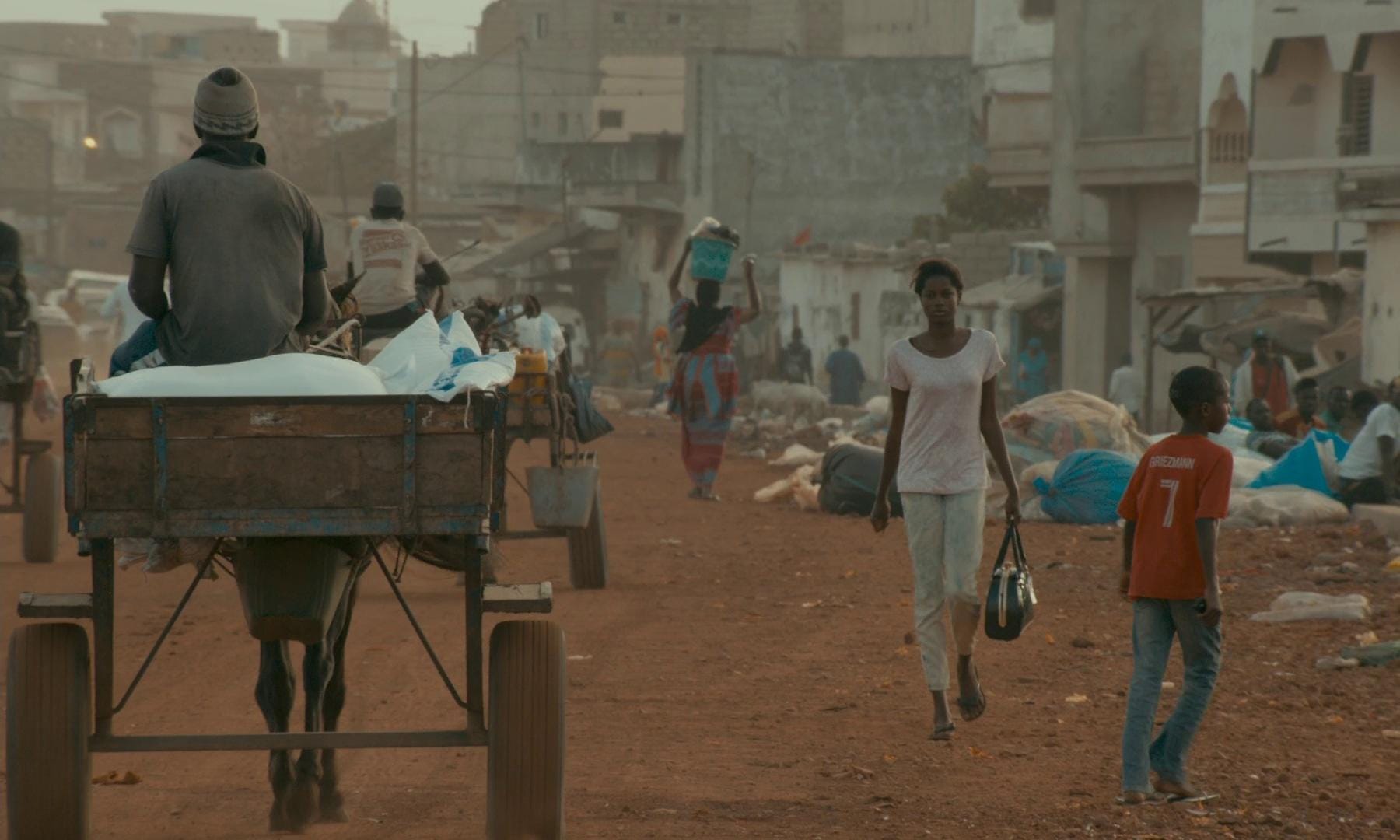
Lastly, it should be noted that Souleimane and the rest work in the construction business. Much of the film sails around dreamy, lulling scenes of half-finished skyscrapers and dusty, bare, open clay-faces, waiting for closure and completion much like the unpaid labourers who continuously work on them. Fatima Al- Qadiri’s eclectic score – a mix of drone, ambient pop and acoustic Senegalese instrumentals – paints an ethereal portrait over the changing landscape of modern Dakar. Senegal, like much of Africa, is propelling towards a fresh industrial era without clear justification for those who tend towards its reconstruction. Many of these skyscrapers and corporate structures do not hold any direct benefit towards the millions all bunched up around them in central business districts; yet, at the same time, they hold dire importance, as the means for which they strive to make a living.
We bulldoze over the Africa of old with no say reagarding if we find something precious of the Africa of today. As a result, spirits and spiritual practices, which hold more permanence than Dakar’s pillars of industry, permeate throughout the world of our contemporary characters. It does not feel right to claim that they “invade” the character’s worlds; it is certainly way more fitting, though, to claim the opposite.
Much more can be said about Diop’s startling debut; as always, I find it quite difficult knowing where to end. Still, it feels fitting to end things off here. And so, our first part of our 31 for 31 Challenge ends, wherein 31 films directed by women will be subject to a short piece of writing by yours truly, and a few guest writers to come along the way. We hope you found this piece illuminating, and that you own the hunger to come back around tomorrow for more by us.